Load up on games with this huge 4 TB SSD, at less than $0.05 per GB
It's not the fastest out there but you're getting a massive amount of storage for the money
Keep up to date with the most important stories and the best deals, as picked by the PC Gamer team.
You are now subscribed
Your newsletter sign-up was successful
Want to add more newsletters?
Every Friday
GamesRadar+
Your weekly update on everything you could ever want to know about the games you already love, games we know you're going to love in the near future, and tales from the communities that surround them.
Every Thursday
GTA 6 O'clock
Our special GTA 6 newsletter, with breaking news, insider info, and rumor analysis from the award-winning GTA 6 O'clock experts.
Every Friday
Knowledge
From the creators of Edge: A weekly videogame industry newsletter with analysis from expert writers, guidance from professionals, and insight into what's on the horizon.
Every Thursday
The Setup
Hardware nerds unite, sign up to our free tech newsletter for a weekly digest of the hottest new tech, the latest gadgets on the test bench, and much more.
Every Wednesday
Switch 2 Spotlight
Sign up to our new Switch 2 newsletter, where we bring you the latest talking points on Nintendo's new console each week, bring you up to date on the news, and recommend what games to play.
Every Saturday
The Watchlist
Subscribe for a weekly digest of the movie and TV news that matters, direct to your inbox. From first-look trailers, interviews, reviews and explainers, we've got you covered.
Once a month
SFX
Get sneak previews, exclusive competitions and details of special events each month!
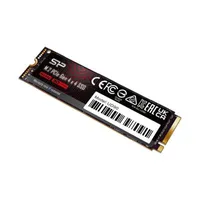
Silicon Power UD90 | 4 TB | NVMe | PCIe 4.0 | 5,000 MB/s read | 4,500 MB/s write | $239.99 $199.99 at Amazon (save $40)
This Silicon Power drive won't set any speed records but it gets our vote for being super value for money. Plus with top-notch parts from Micron and Phison, you know it'll be reliable too.
It's no secret that big-budget games are getting bigger and bigger. Not just in terms of scope and graphics, but also in terms of how much space each one takes up on your storage drives.
If you tried to store all of last year's big releases on your SSD, you'd need well over 1 TB of free space and if that same drive also plays host to the operating system, you're already looking at a 2 TB drive.
One solution is to put all of your games on a separate drive, but what happens when that runs out of space? Sure you can uninstall what you're not playing but if you're like me, and prefer to play lots of different games at any one time, it's better to keep all local.
The best way to do that is to buy this 4 TB Silicon Power UD90 SSD for $200 at Amazon. I know $200 is a lot of money to throw down on a storage drive but it works out at 4.9 cents per GB. That's equivalent to getting a 1 TB for under $50.
In other words, it's really good value for money. Now, I know what you're thinking: "Cheap price means cheap parts." But that's not the case here, as it uses NAND flash memory chips from Micron and an SSD controller from Phison.
What Silicon Power has done, though, is keep the overall transfer speeds down and not fit the SSD with a DRAM cache. In the case of the former, peak read/write speeds of 5,000 and 4,500 MB/s for a PCIe 4.0 NVMe drive aren't super-fast but it won't make much of a difference with games.
The lack of DRAM really only comes into play when you're downloading and installing a really big game. Silicon Power uses a so-called pseudo-SLC cache on its UD90, where a small portion of the SSD runs faster than the rest and acts as a cache for data writes. It's around 70 GB in size so any data writes bigger than that will slow down once the cache is full.
But again, you'll never notice this in games once they're running. So unless you absolutely must have blazing performance all the time, for all use scenarios, then this Silicon Power UD90 is the perfect way to give your gaming PC a mountain of storage for your Steam library.
And at a cent under $200, it's even cheaper than it was in July's Prime Day sales event.

Keep up to date with the most important stories and the best deals, as picked by the PC Gamer team.

Nick, gaming, and computers all first met in the early 1980s. After leaving university, he became a physics and IT teacher and started writing about tech in the late 1990s. That resulted in him working with MadOnion to write the help files for 3DMark and PCMark. After a short stint working at Beyond3D.com, Nick joined Futuremark (MadOnion rebranded) full-time, as editor-in-chief for its PC gaming section, YouGamers. After the site shutdown, he became an engineering and computing lecturer for many years, but missed the writing bug. Cue four years at TechSpot.com covering everything and anything to do with tech and PCs. He freely admits to being far too obsessed with GPUs and open-world grindy RPGs, but who isn't these days?