Last September, Nvidia announced a new product to join its all-conquering collection of AI offerings, Rubin CPX. What made this GPU notable was that it was the company's first attempt at making a processor purely for AI inference. However, while Nvidia's Vera CPU and the other Rubin GPU are seemingly racking up the orders, it's all gone very quiet on the CPX front, and that's potentially a brief respite for PC gamers.
Korean publication The Elec drew my attention to this via a short report on the matter, claiming that sources have told it that the whole thing has ground to a halt. "The industry views the project as effectively cancelled," it writes.
The evidence for this is the apparent lack of printed circuit board (PCB) and DRAM module orders, specifically for Rubin CPX installations. Where Vera Rubin, Blackwell, and older AI superchips all use high bandwidth memory (HBM) for the GPU's local storage, because of the bandwidth demands of AI training, CPX uses 128 GB of GDDR7 mounted directly on the PCB, rather than the processor's package.
In any case, no PCB or GDDR7 orders equivalent to those required for a CPX setup strongly suggests that Nvidia has either sidelined the project for the moment or abandoned it entirely. Rubin CPX wasn't expected to be available until the end of this year, but while we're still a good number of months away from the start of the final quarter, you'd think that production would be scaling now, if demand were high.
So what's happened? The most likely cause was Nvidia entering into a $20 billion non-exclusive technology licensing deal with Groq (not to be confused with Elon Musk's Grok). That company's language processing unit (LPU) design is purely for inference, more so than Rubin CPX, and Nvidia said earlier this year that it was working on integrating the LPU into its Rubin platform.

If you're wondering why I'm even mentioning any of this, when it seems to have nothing to do with PC gaming, it's down to the fact that Groq's LPU doesn't use GDDR7 or even DRAM in general: it's packed with 500 MB of SRAM inside.
Nvidia's Rubin GPU still uses mountains of HBM, of course, but the removal of the need for equally copious amounts of GDDR7 could mean that GeForce RTX 50-series graphics cards won't balloon in price due to VRAM supply constraints.
We'll still be suffering the RAMpocalypse, naturally, because AI and the enormous demand for DRAM and SSDs isn't going anywhere just yet. But in these grim times, I'll take any sliver of hope as good news—simply because the alternative isn't worth contemplating.
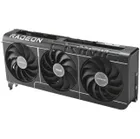
1. Best overall: AMD Radeon RX 9070
2. Best value: AMD Radeon RX 9060 XT 16 GB
3. Best budget: Nvidia RTX 5050
4. Best mid-range: AMD Radeon RX 9070 XT
5. Best high-end: Nvidia GeForce RTX 5090