It's official, the iPhone has gone full Nvidia. Apple rolled out the new iPhone 15 Pro yesterday and announced that it has adopted DLSS and ray tracing. OK, not actual DLSS. But Apple's smartphone now supports upscaling and hardware accelerated ray tracing, which is an awfully Nvidia-ish GPU feature set.
Specifically, the new A17 Pro SoC has what Apple claims is the biggest GPU redesign in the company's history with a heavily revised shader architecture and that hardware ray tracing support.
In the iPhone the GPU count is bumped from five to six and Apple claims 20% more performance. As for the upscaling, that's enabled by using the A17 Pro's Neural engine in parallel to the GPU. That's an approach that looks very similar on paper to Nvidia GPUs doing DLSS upscaling with help from their AI-accelerating Tensor cores.
Article continues belowThe new GPU cores in the iPhone 15 Pro's A17 Pro SoC, the ones that support upscaling and hardware ray tracing, they'll be going straight into Apple's next-gen M3 chips in its Mac computers, including MacBook laptops and the Mac Mini, Mac Studio and Mac Pro desktops. Because that's how Apple's silicon works. The M1 and M2 chips take their CPU and GPU cores straight from contemporary iPhone SoCs.

Of course, none of those rigs are exactly renowned as gaming platforms. But if nothing else it is all pretty interesting as a measure of the success of Nvidia's approach to graphics.
Put it this way. If you had to define what makes Nvidia's PC gaming GPUs stand out as succinctly as possible, you'd say ray tracing and upscaling. And those two technologies are now seen as so essential, they've gone into the iPhone.
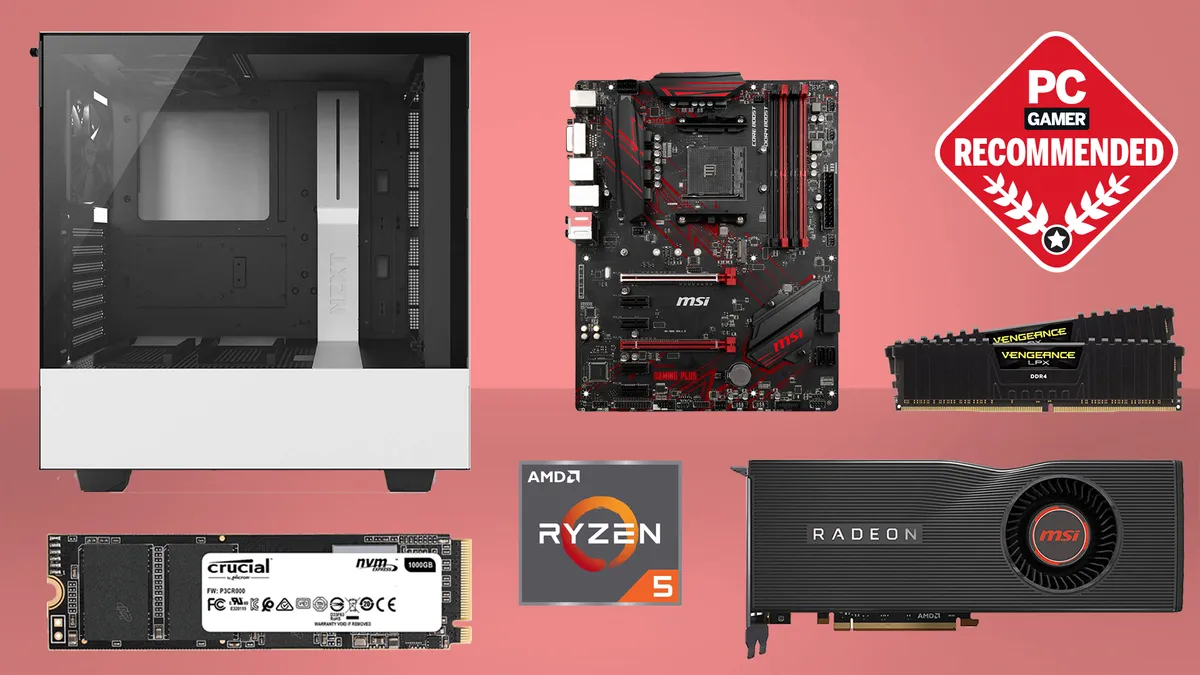
Best CPU for gaming: The top chips from Intel and AMD
Best gaming motherboard: The right boards
Best graphics card: Your perfect pixel-pusher awaits
Best SSD for gaming: Get into the game ahead of the rest
Does any of this signal that iPhones or indeed Macs are set to become serious gaming machines? Probably not. Apple's M1 and M2 chips have had very good GPUs since the original M1 launched back in 2020, but the Mac hasn't really progressed as a gaming platform as a consequence.
So, it's a stretch to think upscaling and ray tracing will make the difference. But these technical revisions do mean that Apple Macs will have the hardware potential for a good gaming experience.
It's just a question of whether Apple wants to put in the effort on the ecosystem and software side to make it happen. Apple's game porting Toolkit certainly looks like a step in the right direction. But thus far, Apple hasn't made a really convincing effort to make gaming on Macs a genuine thing, whatever the merits of the graphics hardware it offers.